OVERUSED WORDS & PHRASES BY CHATGPT
11 July 2024
By Anisa Pinatih
Have you ever read something written by ChatGPT and felt like you needed a dictionary and a thesaurus just to understand it? You're not alone.
While ChatGPT is a powerful tool, it can sometimes fall into the trap of using overly complex language and jargon. This can make your writing sound vague and confusing.
Here are some telltale signs a text might have been penned by ChatGPT and some tips to overcome its shortcomings:
Long, Winding Sentences
ChatGPT loves long, winding sentences that pack in multiple ideas. These sentences may sound impressive, but they leave the reader feeling winded.
Formal Friday, Casual Monday
ChatGPT can struggle to match your desired tone. A friendly blog post might sound like a boardroom presentation or a business email might read like a text message.
All dressed up with nowhere to go
ChatGPT can churn out fancy-sounding phrases that don't actually say much. Statements are often vague, with no specific examples and concrete details.
Jargon Overload
ChatGPT loves business buzzwords like "leverage," "actionable insights," and "data-driven decisions". Its cookie cutter introductions often starts with "delve into", allegedly linked this to this surge in PubMed papers:
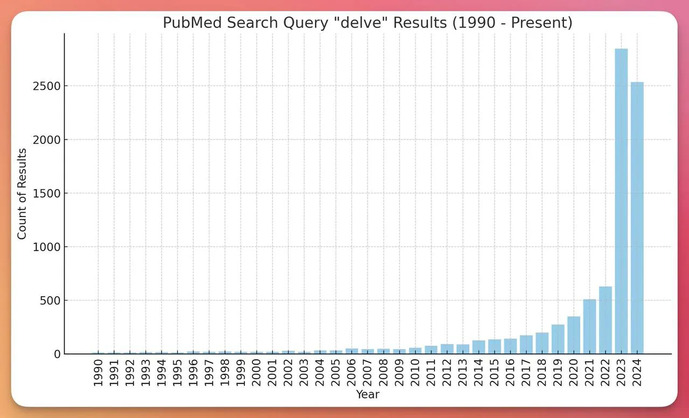
Source: @JeremyNguyenPhD
See what happened in 2023 after ChatGPT was launched for a full year, so many "delve into". Does it mean all those papers were written using ChatGPT? Correlation doesn't imply causation, but potato potahto. See also:
How Do I Spot a Text Written by AI?
In any case though, there’s always a way to optimise the technology.
Here are a few tips:
#1: Read your text out loud. Does it sound natural? If not, simplify it!
#2: When using ChatGPT, provide clear instructions about the desired tone and style. The more specific you are, the better your results will be.
#3: Clean up your writing. Keep it short and simple. Use concise language to ensure your message gets across loud and clear.
Here are some examples:
Before
"I look forward to collaborating with you to leverage these learnings effectively in our future research endeavours."
After
"Let's discuss how we can use these insights to improve our next research planning."Before
"This research leverages complex datasets to extract meaningful insights into the intricacies and the nuanced meaning of..."
After
"This research analyses complex data to reveal insights into the subtleties of..."
Remember, strong writing is about clarity and conciseness. By dropping the jargon and focusing on getting your point across, you can make your article resonate with your readers.
Most importantly, tip #4 avoid these words and phrases:
Overused adjectives:
Critical, inclusive, profound, uncharted, multifaceted, unprecedented, vibrant, bustling, vital, profound, compelling, transformative, akin, nuanced, enlightening, groundbreaking, adept, commendable, dynamic, efficient, ever-evolving, exciting, exemplary, innovative, invaluable, robust, seamless, synergistic, thought-provoking, transformative, utmost.
Overused verbs:
Delve into, elevate, embark, explore, embrace, navigate, resonate, integrate, collaborate, unveil, underscore, unlock, bolster, leverage, captivate, shed light, harness, spearhead, derive, aligns, augment, facilitate, maximise, utilise.
Overused nouns:
Nexus, pitfalls, insights, nuances, forefront, trajectory, realm, beacon, complexities, intricacies, efficiency, innovation, institution, integration, implementation, landscape, optimisation, tapestry, transformation.
Meaningless adverbs:
Additionally, consistently, effectively, strategically, enthusiastically, closely, flawlessly, effectively, efficiently, successfully, cross-functionally
Meaningless phrases:
A testament to, embark on a journey, the … is a tapestry of…, in the dynamic world of…, results-driven, solid foundation, actionable insights, innovative solutions, strong collaborator, drive efficiency, complex challenges, track record, deriving invaluable insights from data, leverages complex datasets to extract meaningful insights, delivering actionable insights through in-depth data analysis, leveraging data to drive invaluable outcomes.
All in all, ChatGPT can be a powerful writing tool, but it's essential to refine its output. By understanding its limitations like the complex language, jargon, inconsistent tone, and overused words and phrases like the above, you can still use it to create clear, meaningful content.

